Priscilla Queen of the Desert: A Complete Guide for Community Theatre Productions

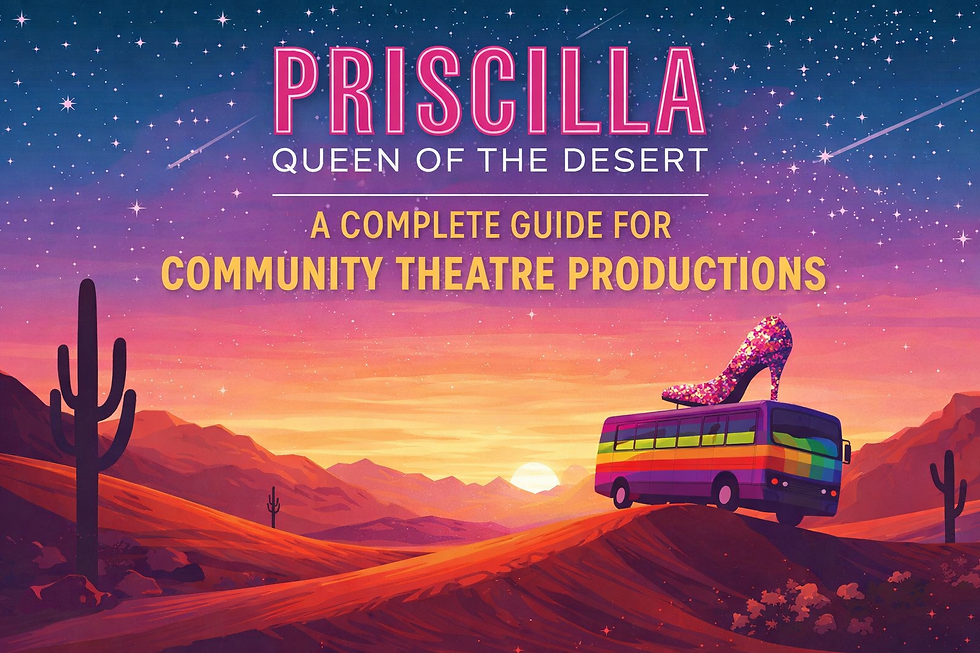
Priscilla Queen of the Desert is bold, brilliant, and unapologetically theatrical. Packed with iconic disco anthems, outrageous costumes, and heart-warming storytelling, it is a show that celebrates identity, resilience, and the power of performance. For community and adult theatre groups, it offers something rare: a production that is both spectacular and deeply human.
Set against the vast Australian outback, the story follows three drag performers travelling across the desert in a battered old bus named Priscilla. Along the way, they encounter prejudice, friendship, self-discovery, and unexpected moments of tenderness. Beneath the glitter and platform boots lies a story about acceptance, chosen family, and finding the courage to live authentically.
This guide is designed for directors, musical directors, performers, and production teams considering staging Priscilla Queen of the Desert. From its history and themes to the musical and technical challenges involved, we will explore what makes this show so powerful and how to approach it with confidence and clarity.
What is Priscilla Queen of the Desert About?
Priscilla Queen of the Desert follows three drag performers who set out on a road trip across the Australian outback in a battered lavender bus named Priscilla. The trio includes Tick, a seasoned performer who is invited to perform at a remote resort, Adam, a flamboyant and fearless young queen, and Bernadette, a glamorous transgender woman navigating love and loss.
As they travel from Sydney to Alice Springs, the journey becomes far more than a simple gig. Along the way they face hostility, prejudice, and moments of real danger. But they also experience unexpected kindness, build deeper friendships, and confront truths about themselves.
At its heart, the show is about identity and authenticity. Tick is wrestling with fatherhood and responsibility. Bernadette is grieving the loss of her partner while searching for companionship again. Adam is bold and unapologetic, but still learning what courage really means. Their road trip becomes a vehicle for growth, healing, and acceptance.
The musical is driven by a jukebox score of disco and pop classics including “It’s Raining Men,” “I Will Survive,” “Girls Just Want to Have Fun,” and “Finally.” These songs are not simply inserted as crowd pleasers. They amplify emotion, push character development forward, and transform key moments into high energy theatrical events.
While the glitter, heels, and choreography are spectacular, the story underneath is surprisingly tender. It explores friendship, belonging, prejudice, resilience, and the importance of living truthfully. For community and adult theatre groups, this blend of spectacle and sincerity is what makes the show so compelling.
History of the Musical
Priscilla Queen of the Desert began life as a 1994 Australian film, The Adventures of Priscilla, Queen of the Desert, written and directed by Stephan Elliott. The film quickly became a cult classic, celebrated for its bold humour, unforgettable costumes, and heartfelt portrayal of LGBTQ+ characters at a time when mainstream representation was far less common.
The stage musical adaptation premiered in Sydney in 2006. Like the film, it combined outrageous spectacle with emotional depth, but the stage version leaned even further into the jukebox format, building the score around iconic disco and pop hits from the 1970s and 1980s. Songs by artists such as Gloria Gaynor, Cyndi Lauper, Donna Summer, and Tina Turner became the backbone of the theatrical experience.
The production transferred to London’s West End in 2009, where it ran for several years and won the Olivier Award for Best New Musical. It later opened on Broadway in 2011 and toured internationally, with productions across Europe, Australia, and beyond.
One of the defining features of the stage version is its visual scale. The bus itself often becomes a centrepiece of the set design, and the costumes are famously extravagant, sometimes featuring hundreds of costume changes in a single production. The musical has developed a reputation for high energy choreography, large ensemble numbers, and visually striking design elements.
Over time, Priscilla has become a favourite for community and adult theatre groups who are looking for a show that combines strong ensemble work, big production values, and meaningful storytelling. Its blend of humour, heart, and unapologetic celebration of identity has helped it maintain its place as a modern musical theatre staple.
Key Themes
Beneath the sequins and disco soundtrack, Priscilla Queen of the Desert explores themes that are deeply human and emotionally resonant.
Identity and Authenticity
At its core, the show is about living truthfully. Each of the three central characters is navigating what it means to be seen for who they really are. The road trip becomes symbolic of self discovery, with the desert acting as a vast, open space where masks begin to fall away.
The message is clear. Authenticity requires courage.
Chosen Family
Tick, Bernadette, and Adam are not related by blood, yet they form a bond built on loyalty and shared experience. The show celebrates the idea that family can be created through support, love, and mutual respect.
For community theatre groups, this theme often mirrors the rehearsal room itself.
Resilience in the Face of Prejudice
The trio encounter hostility and discrimination throughout their journey. Rather than ignoring this reality, the show acknowledges it while also highlighting strength and dignity. Humour becomes a tool for survival, not avoidance.
The story reminds audiences that joy can exist even in challenging environments.
Love and Acceptance
Bernadette’s storyline explores grief and the possibility of new love. Tick’s relationship with his son adds another layer of acceptance and vulnerability. These quieter moments balance the spectacle and ground the musical in emotional truth.
Celebration and Self Expression
Through costume, performance, and music, the show celebrates individuality. The disco anthems are more than entertainment. They become declarations of confidence and solidarity.
For adult and community theatre groups, these themes provide substance beneath the spectacle. Priscilla may dazzle visually, but it endures because it speaks honestly about identity, belonging, and the power of embracing who you are.
Why Priscilla Works for Community & Adult Theatre Groups
Priscilla Queen of the Desert is rarely staged in school settings, but for community and adult theatre groups it can be a standout production. It combines spectacle, strong ensemble work, and meaningful storytelling in a way that suits experienced performers and ambitious production teams.
A Showcase for Strong Performers
The principal roles require confidence, emotional range, and stage presence. Tick, Bernadette, and Adam are complex, layered characters who must balance humour with vulnerability. For adult performers, these roles offer depth beyond caricature.
Ensemble Energy
The show features large, high energy group numbers driven by iconic disco hits. This allows a strong ensemble to shine through choreography, harmonies, and character work. Community companies with confident dancers and singers can create an electric atmosphere.
Production Value Opportunities
From elaborate costumes to the visual impact of the bus itself, Priscilla offers scope for creative design teams. Costume departments in particular can showcase bold, imaginative work that becomes a major talking point for audiences.
Built In Audience Appeal
The jukebox score features instantly recognisable songs. Familiar disco anthems help draw in audiences who may not usually attend musical theatre. This can be particularly valuable for community companies looking to broaden their reach.
Emotional Depth Beneath Spectacle
While the glitter and humour attract attention, the emotional core of the story keeps audiences invested. Themes of identity, resilience, and belonging resonate strongly with adult audiences.
When approached thoughtfully, Priscilla becomes more than a party musical. It becomes a celebration of individuality, community, and theatrical courage. For adult theatre groups willing to commit to its scale and spirit, it can be one of the most rewarding shows to stage.
Musical and Production Challenges
Priscilla Queen of the Desert may be built around familiar disco hits, but it is far from an easy production. Both musically and technically, it demands planning, stamina, and precision.
Vocal Stamina and Style
The score is packed with high energy pop and disco anthems. Sustaining belt heavy numbers night after night requires strong vocal technique and careful pacing in rehearsal. Even though the songs are recognisable, they must be delivered with theatrical control rather than karaoke energy.
Breath support and vocal health are essential, especially in large ensemble numbers.
Ensemble Precision
Big dance driven songs rely on tight harmonies and coordinated movement. Singing while executing choreography requires rehearsal discipline and gradual stamina building. If vocals and movement are not integrated early, balance can suffer.
Band and Musical Direction
The orchestration often mirrors the driving pulse of disco. Maintaining groove, tempo consistency, and stylistic authenticity is crucial. A strong rhythm section is key to preventing the show from feeling flat.
Clear communication between the pit and stage ensures momentum never dips.
Costume Scale
This is famously one of the most costume intensive musicals in modern theatre. Quick changes are frequent, elaborate, and sometimes technically complex. Without strong backstage organisation, transitions can quickly become chaotic.
Set and Technical Demands
The bus itself is often a focal point. Whether represented literally or symbolically, it requires thoughtful staging. Lighting design plays a huge role in creating the contrast between desert isolation and glittering performance numbers.
Tone Management
The show balances camp humour with sincere emotional moments. Lean too far into parody and the heart of the story is lost. Underplay the spectacle and the show loses its spark.
In short, Priscilla demands commitment. With structured rehearsal, vocal care, and strong production planning, it becomes vibrant and cohesive. Without preparation, its scale can overwhelm even experienced companies.
Recognising these challenges early allows community theatre groups to plan strategically and deliver a production that is both dazzling and emotionally grounded.
Why Preparation Matters
With a production as bold and technically demanding as Priscilla Queen of the Desert, preparation is what keeps the show polished rather than chaotic.
Protecting Voices in a Disco Score
Many of the numbers sit in a sustained belt range and require high energy delivery. Without careful vocal pacing and warm up routines, fatigue can quickly become an issue. Early technical work on breath support and mix placement allows performers to maintain power without strain.
Consistency across a run is more important than volume in rehearsal.
Securing Ensemble Groove
Disco driven music relies on rhythm and precision. The groove must feel tight and unified. Breaking down harmonies early and rehearsing rhythm sections slowly before building tempo prevents the show from feeling rushed.
When timing is secure, the energy feels effortless.
Coordinating Technical Elements
Costume changes, set transitions, and lighting cues must be rehearsed with as much care as the music. Clear backstage systems and detailed technical run throughs reduce stress during performance week.
Preparation behind the scenes is just as vital as rehearsal on stage.
Balancing Camp and Sincerity
The show’s humour is bold, but its emotional core is genuine. Taking time to explore character motivations ensures that the heart of the story remains intact beneath the spectacle.
Preparation helps avoid caricature and strengthens authenticity.
Building Company Trust
Priscilla celebrates chosen family and solidarity. A well structured rehearsal process builds that same sense of trust within the cast and crew. When everyone feels secure in their role, the production becomes cohesive and confident.
In a show that sparkles as brightly as Priscilla, preparation is what allows the glitter to shine without overwhelming the story. Strong musical foundations, protected voices, and organised technical planning ensure the final result feels joyful, controlled, and emotionally resonant.
Final Thoughts
Priscilla Queen of the Desert is bold, joyful, and unapologetically theatrical. Beneath the sequins, disco anthems, and towering heels lies a story about resilience, identity, and the power of chosen family. For community and adult theatre groups, it offers the chance to stage something visually spectacular while still delivering genuine emotional depth.
When approached with care, the show becomes more than a jukebox party. It becomes a celebration of authenticity and courage. The key is preparation. Strong vocal foundations, secure ensemble harmonies, and thoughtful technical planning ensure the production feels polished rather than overwhelming.
If you are planning a production, you can explore my full set of rehearsal and backing tracks for Priscilla Queen of the Desert here:
Structured musical support outside rehearsal can help maintain disco groove, protect belt heavy voices, and give your company the confidence to deliver both spectacle and sincerity.
With thoughtful preparation and a committed company, Priscilla can become one of the most vibrant and memorable productions your theatre stages.


Comments