Analysing the Score of The 25th Annual Putnam County Spelling Bee
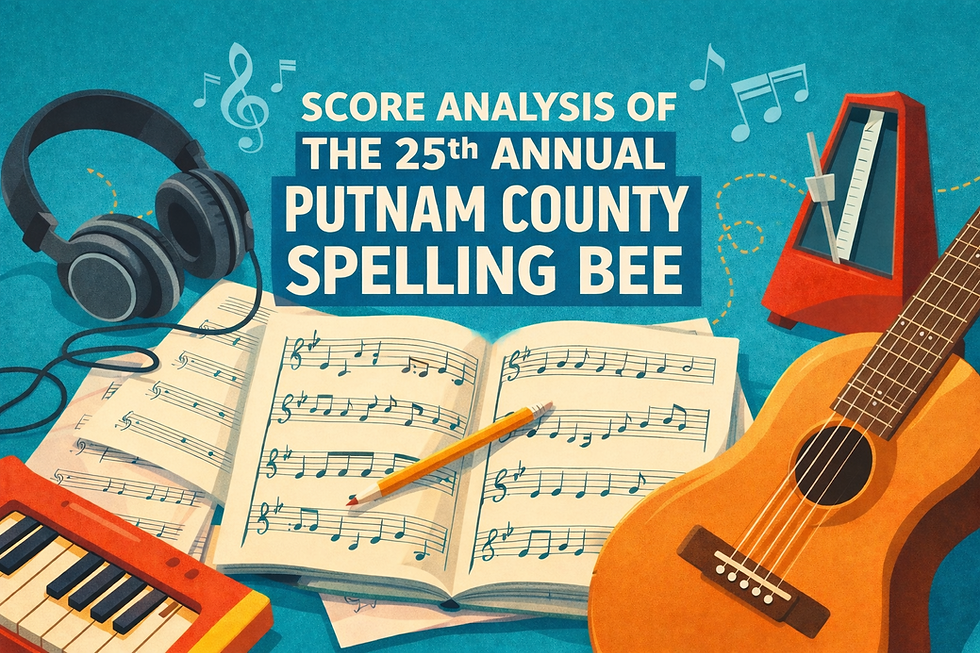
The music of The 25th Annual Putnam County Spelling Bee plays a crucial role in shaping the show’s distinctive tone and storytelling. While the musical is widely known for its comedy and audience participation, the score also provides depth to the characters and helps guide the emotional journey of the story.
Composed by William Finn, the music blends humour, character driven writing, and moments of genuine sincerity. Each contestant in the spelling competition is given a musical voice that reflects their personality, background, and insecurities. Through these songs the audience begins to understand who these characters are beyond the spelling bee itself.
The score moves fluidly between energetic ensemble numbers and intimate character moments. Fast paced songs capture the chaotic energy of the competition, while quieter moments allow the emotional lives of the characters to emerge. This balance between comedy and sincerity is one of the reasons the musical resonates so strongly with performers and audiences alike.
In this article we will take a closer look at the musical structure of The 25th Annual Putnam County Spelling Bee. We will explore the show’s musical style, how the songs develop character, and how the score supports the pacing and storytelling of the production.
Musical Style
The musical style of The 25th Annual Putnam County Spelling Bee reflects the distinctive writing voice of composer William Finn. Finn is known for creating scores that combine humour with emotional honesty, and this musical demonstrates that balance throughout its songs and ensemble numbers.
Rather than relying on one consistent musical genre, the score blends several styles that reflect the personalities of the characters and the shifting tone of the story. Elements of contemporary musical theatre sit alongside pop influenced melodies, light jazz harmonies, and comedic musical writing. This variety helps keep the score lively while giving each character a musical identity of their own.
Many of the songs are written in a way that supports the comedic rhythm of the show. Quick tempo changes, unexpected lyrical phrasing, and energetic ensemble sections help capture the chaotic atmosphere of the spelling competition. Numbers such as “Pandemonium” use fast paced rhythms and overlapping musical lines to create the sense of confusion and excitement that occurs when the competition becomes intense.
At the same time the score also includes moments of musical simplicity that allow the emotional themes of the story to emerge more clearly. When the characters reveal their fears or personal struggles, the music often becomes more melodic and reflective. These quieter musical moments help balance the high energy comedy that drives much of the show.
This combination of humour, musical variety, and character focused writing gives the score its distinctive identity. The music does not simply accompany the action on stage. Instead it actively shapes the audience’s understanding of the characters and their emotional journeys throughout the spelling competition.
Character Songs
One of the most distinctive features of the score in The 25th Annual Putnam County Spelling Bee is the way each contestant is given a song that reveals their personality and emotional world. Rather than presenting the competitors as simple comedic characters, the music allows the audience to understand their fears, ambitions, and personal struggles.
Many of these songs function as character introductions. Early in the show the audience begins to learn who these young competitors are and what drives them to succeed in the spelling competition. For example, songs such as “My Friend the Dictionary” introduce the contestants while highlighting their individual quirks and motivations. Through both lyrics and musical style, the audience quickly begins to recognise the unique identity of each character.
Other songs reveal deeper emotional layers beneath the humour of the competition. “Magic Foot” presents a confident and eccentric performance that reflects the personality of Leaf Coneybear, while “I Speak Six Languages” showcases Marcy Park’s determination and intense pressure to succeed. In both cases the music reinforces the character traits that define each competitor.
The score also allows for moments of vulnerability. Songs like “I’m Not That Smart” reveal Olive Ostrovsky’s insecurity and longing for approval, creating one of the show’s most touching moments. These emotional songs provide contrast to the high energy comedy that surrounds the spelling competition and help the audience connect with the characters on a more personal level.
By giving each contestant a musical moment that reflects their inner thoughts, the score transforms the spelling bee from a simple competition into a story about growing up, expectations, and self discovery. The music becomes a powerful storytelling tool that deepens the audience’s understanding of the characters while maintaining the show’s playful tone.
Ensemble Writing
While the character songs help develop the personalities of the individual contestants, the ensemble numbers in The 25th Annual Putnam County Spelling Bee create the energy and momentum that drive the competition forward. These moments allow multiple characters to interact musically, building a sense of excitement and chaos that reflects the pressure of the spelling bee.
Ensemble writing is particularly effective during moments when the competition intensifies. Songs such as “Pandemonium” bring together the contestants, judges, and audience participants in a fast paced musical sequence that captures the rising tension of the event. The music moves quickly, with overlapping vocal lines and rhythmic patterns that mirror the confusion and excitement of the competition as the remaining spellers struggle to keep up.
Composer William Finn uses these ensemble sections to balance humour and structure. The songs often feel chaotic on the surface, but underneath the apparent disorder there is a carefully constructed musical framework that keeps the scene moving forward. This allows the performers to deliver both comedic moments and clear storytelling at the same time.
These ensemble moments also help reinforce the sense that the spelling bee is a shared experience. Even though the competitors each have their own stories and personal challenges, the ensemble writing reminds the audience that they are all part of the same intense and unpredictable event. The music brings the characters together while heightening the sense of anticipation surrounding each new word.
By combining energetic ensemble writing with character driven songs, the score maintains a dynamic balance throughout the show. The audience experiences both the personal journeys of the contestants and the collective tension of the competition itself.
Emotional Core of the Score
While much of The 25th Annual Putnam County Spelling Bee is driven by comedy and high energy ensemble writing, the score also contains moments of genuine emotional depth. These quieter sections allow the audience to step away from the chaos of the competition and connect with the characters on a more personal level.
One of the most powerful examples of this is the song “The I Love You Song.” In this moment, Olive Ostrovsky imagines her parents finally giving her the attention and affection she has been longing for. The music becomes more reflective and expressive, contrasting sharply with the energetic and comedic tone of the surrounding scenes. This shift allows the audience to see the emotional vulnerability behind Olive’s determination to succeed in the spelling bee.
Composer William Finn frequently uses these musical contrasts to highlight the inner lives of the characters. Beneath the humour and awkwardness of the competition are children who are dealing with pressure, expectations, and a desire for acceptance. The music gives these feelings space to emerge without losing the playful tone of the overall production.
These emotional moments are important because they prevent the musical from becoming purely comedic. Instead, the show balances humour with sincerity, allowing the audience to laugh at the absurdity of the competition while still caring about the characters involved. This emotional grounding helps the story resonate with audiences of all ages.
By including moments of vulnerability alongside the show’s energetic comedy, the score achieves a balance that feels both entertaining and meaningful. The audience is not only watching a spelling competition unfold but also witnessing the emotional experiences of young people trying to find their place in the world.
Why the Score Works
One of the reasons the score of The 25th Annual Putnam County Spelling Bee continues to resonate with performers and audiences is its strong balance between comedy, character development, and musical variety. Each song serves a clear dramatic purpose, helping to move the story forward while also revealing something meaningful about the characters involved in the competition.
Composer William Finn uses music as a storytelling tool rather than simply as entertainment between scenes. The songs introduce the contestants, highlight their personalities, and explore the pressures they face as young competitors trying to succeed. This approach gives the musical a strong emotional foundation while still allowing for moments of humour and absurdity.
Another strength of the score is its accessibility. The music is engaging and character driven, but it is also practical for schools and youth theatre companies to perform. The songs allow performers to focus on storytelling and character interpretation while still providing opportunities for strong vocal performances.
The score also maintains a strong sense of pacing. Energetic ensemble numbers keep the competition moving forward, while quieter character moments allow the audience to pause and connect with the contestants on a deeper level. This balance helps sustain audience interest throughout the entire production.
Ultimately, the music of The 25th Annual Putnam County Spelling Bee succeeds because it supports both the comedic and emotional elements of the story. The score captures the awkwardness, humour, and vulnerability of growing up, transforming a simple spelling competition into a musical that feels both entertaining and surprisingly heartfelt.
Final Thoughts of The 25th Annual Putnam County Spelling Bee Score
The score of The 25th Annual Putnam County Spelling Bee demonstrates how effective musical storytelling can elevate a simple concept into a memorable theatre experience. Through a combination of character driven songs, energetic ensemble writing, and moments of genuine emotional depth, the music helps shape the personalities and journeys of the contestants throughout the spelling competition.
Composer William Finn successfully balances humour with sincerity, allowing the audience to enjoy the chaotic energy of the spelling bee while also connecting with the characters on a deeper level. The variety within the score keeps the musical engaging from start to finish, while the accessibility of the music makes it particularly well suited for schools, youth theatre companies, and amateur productions.
For performers and directors preparing a production of The 25th Annual Putnam County Spelling Bee, understanding how the score supports the storytelling can make rehearsals much more effective. When the musical structure and character intentions are clear, performers are able to focus on bringing the humour, emotion, and personality of the show to life.
If you are currently rehearsing the show, having clear accompaniment can make learning the music much easier. You can explore a full set of rehearsal tracks and backing tracks for The 25th Annual Putnam County Spelling Bee here:
These tracks are designed to help schools, youth theatre groups, and musical theatre performers rehearse efficiently and prepare confidently for performance.

nice text bro